TGD Insights
Refresh or Rebrand
A Framework Weighing Change
May 8, 2026

A rebrand is not the only answer, and it's not always the right one. The real question is whether your organization needs a refresh or a rebrand, and the difference between the two shapes budget, timeline, and the trust you carry with the members, customers, and donors you already serve.
Two Different Problems, Two Different Solutions
A brand refresh updates visual expression while preserving the core identity and market positioning that your audiences already recognize. The name stays. The mission stays. The equity stays. What changes is how the brand shows up in the world: a new logo, an updated color palette, refreshed typography and imagery, a sharper tagline, and the editorial voice that runs through publications, campaigns, and customer touchpoints. A refresh is the right tool when the foundation is still sound and the surface has fallen out of step with current audiences.
A rebrand is a different undertaking. It redefines what the organization means in the market. That may include a new name, a new positioning statement, a new visual identity, and a reorientation of the programs, products, and communications that sit underneath. A rebrand is the right tool when the organization has outgrown its current name, when a merger or major strategic shift has changed what it actually does, or when existing perceptions are working against growth and retention in ways a facelift cannot address.
The distinction matters because the wrong choice is expensive in either direction.
Four Conversations That Change the Answer
Most rebranding regret traces back to skipping one of these four conversations.
First, what does your current name and identity do for you, and against you? Longstanding organizations often carry decades of equity that new entrants would pay handsomely to build. Discarding that equity without clear cause is expensive in ways that are hard to quantify, whether you are measuring member retention, customer loyalty, or donor affinity.
Second, has your mission shifted, or just its expression? A refresh handles the second. Only a rebrand handles the first.
Third, what do your members, customers, and donors actually associate with your brand? Assumptions from leadership rarely match the answers that come back from stakeholder interviews, surveys, and focus groups. Grounding the decision in evidence from current audiences, lapsed ones, and prospective ones is the single most important step.
Fourth, what can your organization realistically absorb in the next 12 to 18 months? A full rebrand is a cross-functional undertaking that touches website, publications, signage, events, employee email signatures, product packaging, customer portals, and every downstream program. An organization in the middle of a leadership transition, a major technology migration, or an aggressive growth or fundraising campaign may be better served by a focused refresh now and a rebrand when the runway is clear.
When the Name Itself No Longer Fits the Mission
The American Association of Blood Banks stood at a crossroads. The organization had expanded far beyond its founding focus, leading a field that now included cellular therapies, regenerative medicine, and biotherapies the original name had never anticipated. The tagline at the time, Advancing Transfusion and Cellular Therapies Worldwide, hinted at the broader work. The name itself did not.
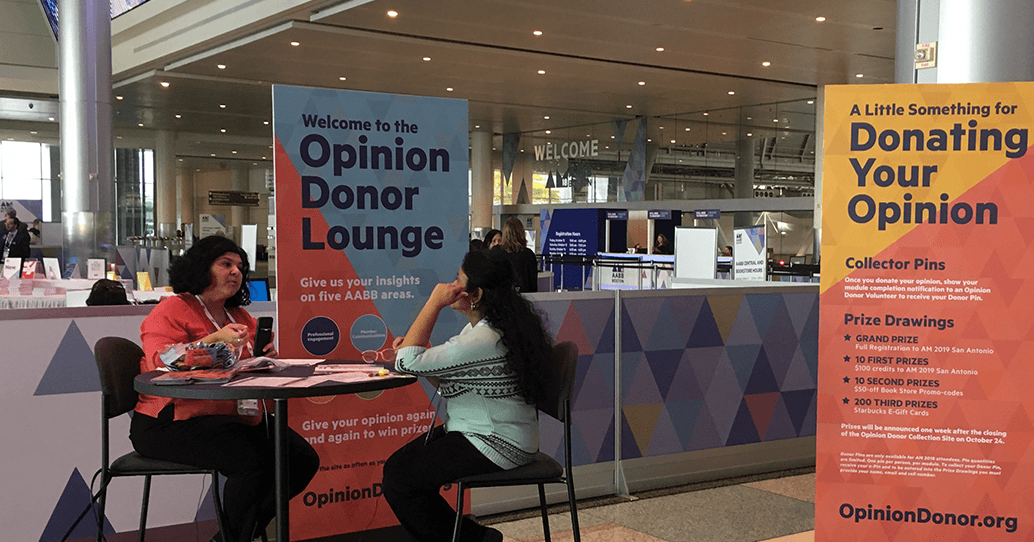
TGD partnered with AABB on a comprehensive strategic renaming and rebranding initiative, beginning with a detailed brand audit and market analysis. Central to that process was the Opinion Donor program at the annual conference, where attendees were invited to share candid perspectives on AABB's products and services. The conversations were captured through one-on-one interviews in a dedicated Opinion Donor Lounge, recorded private sessions, and a graphic recorder who translated stakeholder thinking into visual notes across the three-day event. Audience voice became the foundation the brand was built on top of.
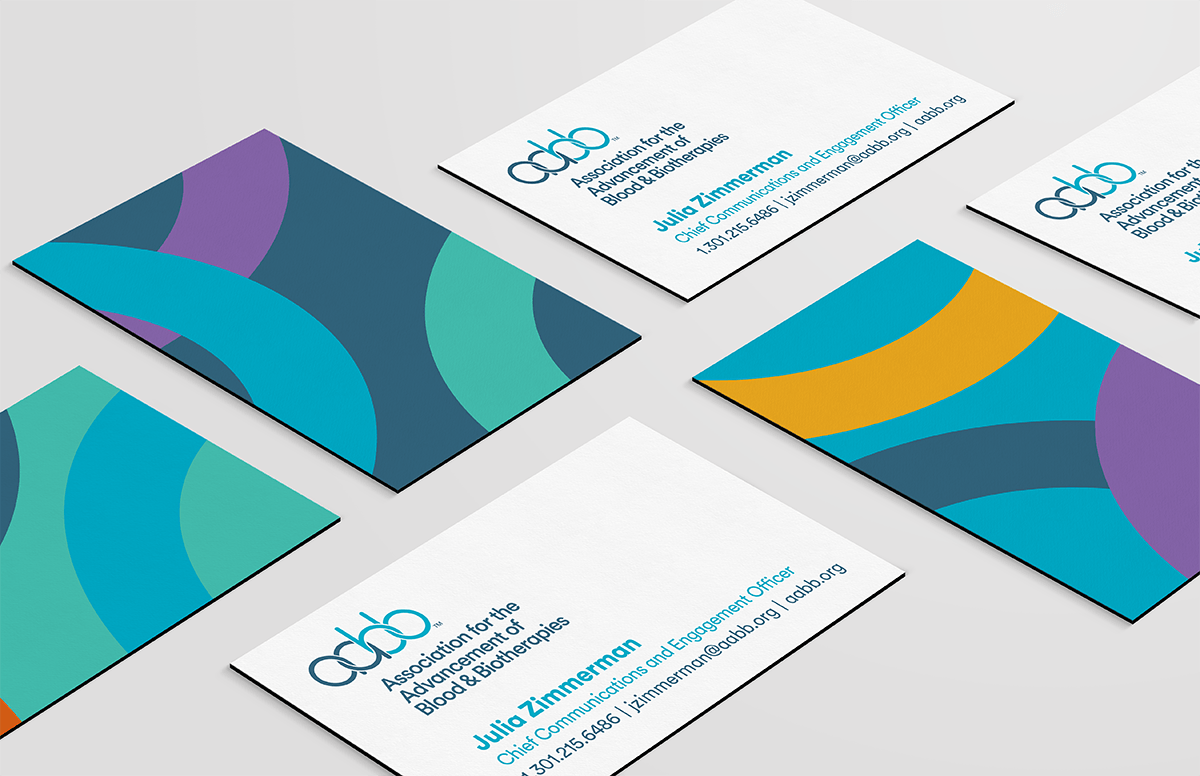
The outcome was a full rebrand: a new name, Association for the Advancement of Blood & Biotherapies, a fresh visual identity with a new logo, a modernized color palette, and a complete brand system that positioned the organization as a leader across the blood and biotherapy community. The new identity was unveiled at the 2021 annual meeting with a video that walked members through the rationale and the path ahead. TGD then worked across every key marketing area to build the new brand into a unified, consistent application, supported by templates, files, and documentation.
The AABB acronym stayed, which preserved decades of recognition. Everything behind it changed. That is what a rebrand looks like when the organization's work has outpaced its name, a pattern that plays out just as often in corporate life, where product lines expand past the founding name, as it does in associations and nonprofits.
When the Brand Just Needs Room to Breathe
The National Active and Retired Federal Employees Association offers the other side of the story. The organization's name was long and formal, but it was also accurate. It had served members for nearly a century. A full rename would have put decades of hard-earned trust at risk, and the underlying mission had not shifted.
What had drifted was the way the brand presented itself to the world. The full name led the logo, which crowded out the plain-spoken value proposition that audiences actually recognized. Younger federal employees, in particular, were not always connecting the organization to the practical benefits they needed. TGD began with a full-scale brand audit, then led a refresh that kept the organizational name intact while reshaping how the brand showed up: a new logo built around the more memorable NARFE acronym, a modernized color palette, a refreshed typography and imagery system, and a sharpened tagline, Federal Benefits Experts, that made the value proposition immediate at any career stage.
The new identity was announced with a promotional video that framed NARFE membership benefits for current and prospective audiences. The response was so positive that the organization returned to TGD for a centennial commemoration, extending the same refreshed identity into a new chapter rather than reopening the branding conversation. The same logic applies when a corporation or nonprofit has strong name recognition but a visual system that has quietly aged out of relevance.
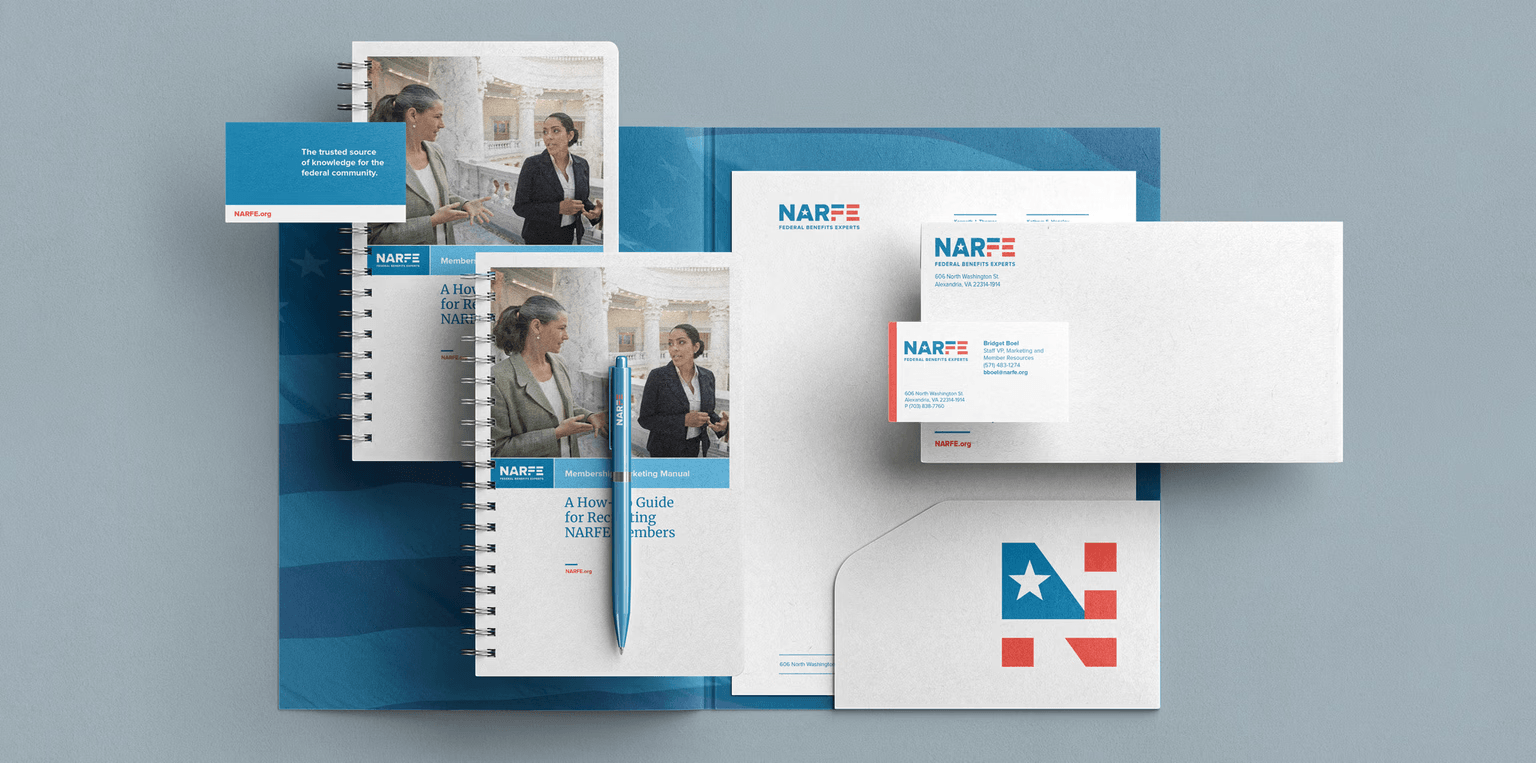
Taken together, the two engagements illustrate the core principle. AABB's problem required redefinition. NARFE's required renewed expression. Industry commentary in 2026 echoes this pattern across sectors: branding strategists consistently caution that organizations with strong existing recognition preserve more long-term equity through refreshes than through full rebrands, while organizations whose name actively works against their mission see the fastest returns from rebranding. A refresh would not have solved AABB's positioning challenge. A rebrand would have been unnecessary and expensive for NARFE.
The Quiet Cost of the Wrong Call
Rebranding when a refresh would do wastes budget, distracts staff, and puts hard-earned recognition at risk. Refreshing when a rebrand is required produces a more attractive version of a brand that still isn't doing its job, and it frequently delays the harder conversation by two to three years.
Both failure modes are expensive. They're just expensive in different ways, which is part of why the decision deserves more time than most organizations give it.
Evidence makes this decision easier. A short discovery phase, built on interviews with current members, customers, and donors, conversations with lapsed ones, a review of peer organizations, and an audit of how the brand is performing across channels, typically costs a fraction of the full initiative and almost always changes something leadership thought it knew going in. Renaming impact analysis is part of that evidence gathering: evaluating the legal and trademark implications, the domain and digital footprint costs, and the likely effect on audience loyalty before anyone commits to a direction.
The Discipline Behind the Work
The organizations that handle this decision well share a common trait, whether they are membership associations, nonprofits, or corporations. They treat brand change as a strategic decision rather than a creative one, and they ground their direction in what their audiences say rather than what leadership assumes. They resist the false choice between standing still and starting over. They are honest about what their brand is doing for them today, candid about what it is no longer doing, and disciplined about matching the intervention to the actual problem.
That discipline is also what makes the work sustainable. A rebrand that fits the organization's moment will carry it for the next decade. A refresh that modernizes without disrupting equity will extend the useful life of a brand your audiences already trust. Either is a meaningful investment in the future, and either can be done in a way that is thoughtful of budget, staff capacity, and the experience of the people you serve.
Making the Call
The refresh or rebrand decision isn't really about visual identity, and it’s more than an updated logo. It's about whether your organization needs a new expression or a new position. Ask the four questions. Listen to what your members, customers, and donors actually tell you. Match the intervention to the problem, not the other way around.
Get those choices right, and the visual identity work that follows is the easier part.
At TGD, we've spent decades guiding associations, nonprofits, and corporations through these moments, helping leadership teams separate the aesthetic question from the strategic one and commit to the path that serves their audiences best. If your team is weighing this decision, a short discovery conversation can sharpen the framing before any creative work begins. It's usually the best investment an organization can make.
Related Case Studies
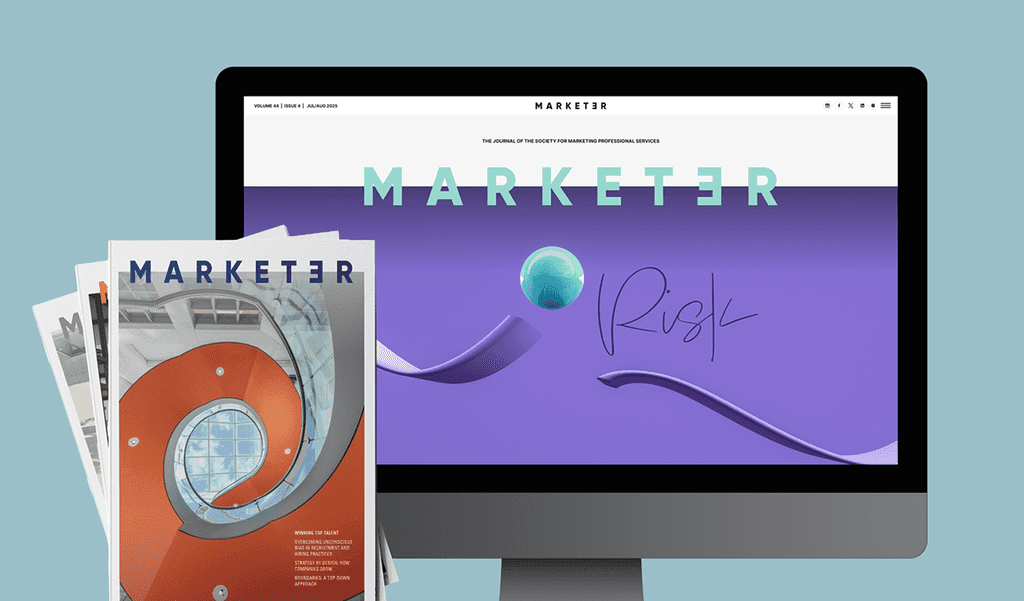
Marketer Journal
The Society for Marketing Professional Services (SMPS) serves marketing and development professionals in the architecture, engineering, and construction (A/E/C) industries who are responsible for nurturing relationships and building credibility to engage prospects and acquire clients for their firms.
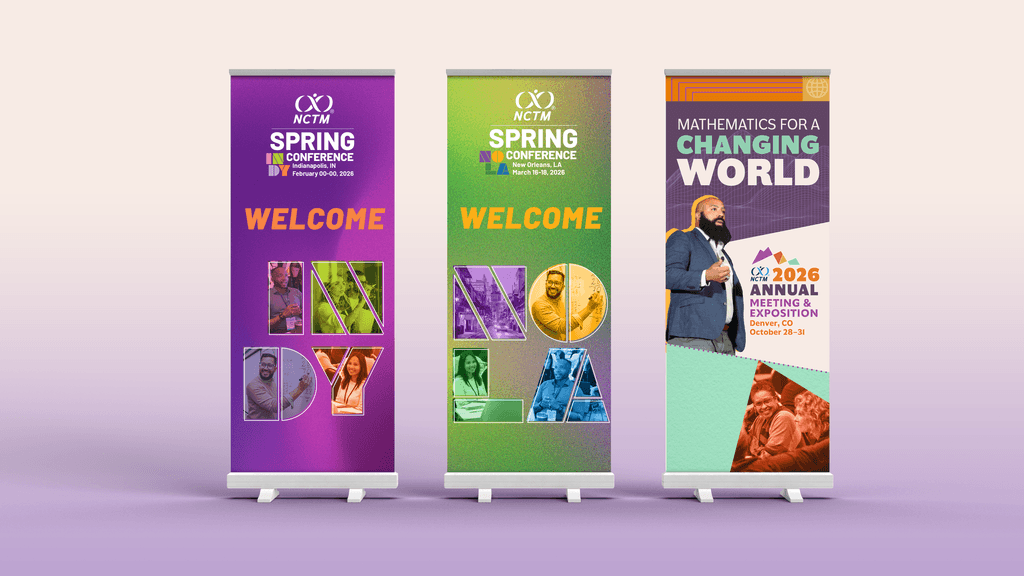
Three Meetings for NCTM
Since 1920, the National Council of Teachers of Mathematics (NCTM) has championed high-quality mathematics teaching and learning. By equipping educators with resources and a supportive community, NCTM fosters professional and personal growth, which ultimately enriches classroom instruction and improves student outcomes.